PUBLICATIONS
Books
Published: Indigenous Literary Studies*
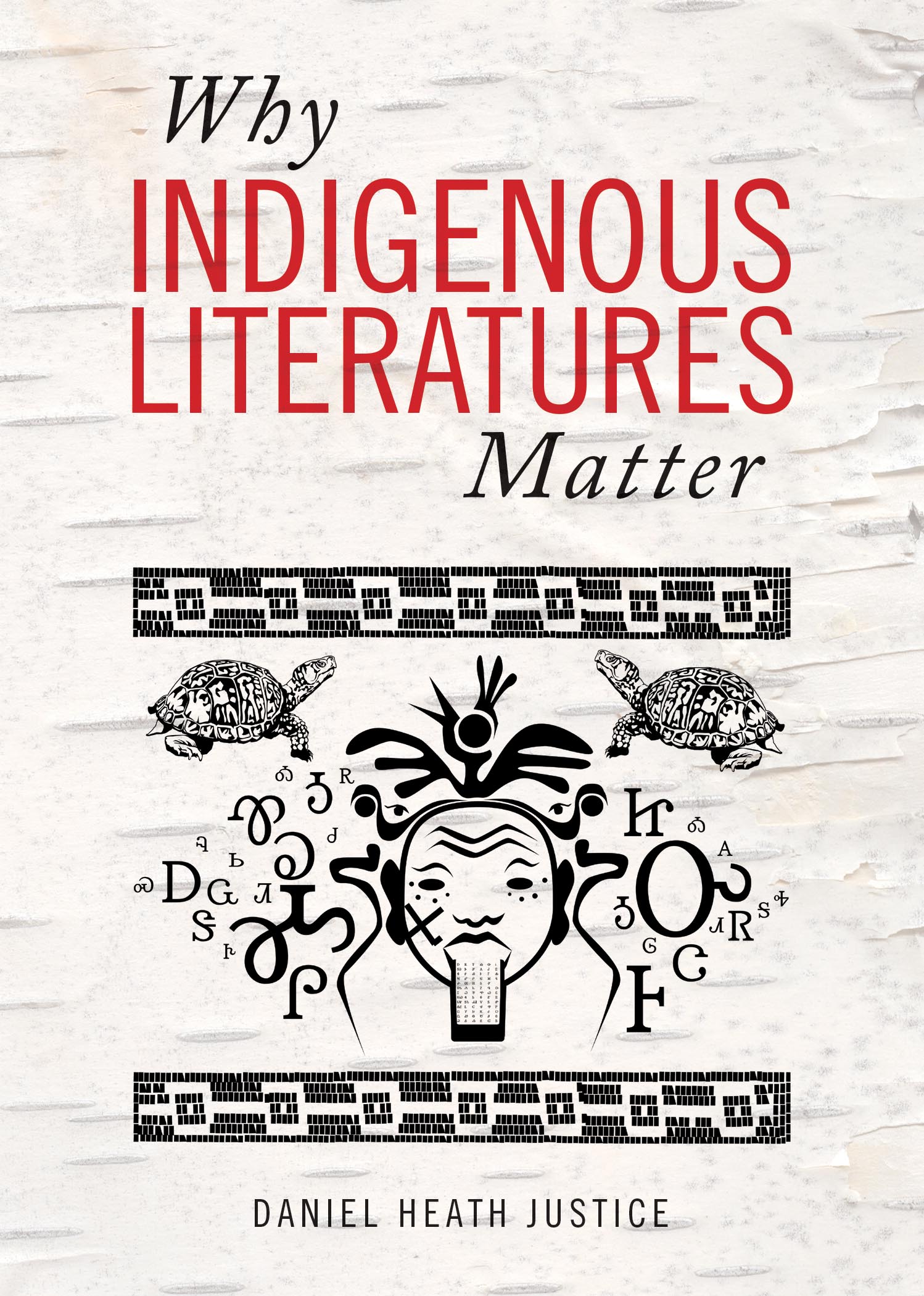
WHY INDIGENOUS LITERATURES MATTER
INDIGENOUS STUDIES SERIES (WILFRID LAURIER UNIVERSITY PRESS, 2018)
- Winner of the Native American and Indigenous Studies Prize for Best Subsequent Book published in 2018 from the voting membership of the Native American and Indigenous Studies Association (NAISA)
- Winner of the 2019 PROSE Award for Excellence in Humanities, Literature from the Association of American Publishers
Part survey of the field of Indigenous literary studies, part political and social history, and part literary polemic, Why Indigenous Literatures Matter considers how Indigenous writing works in the world through persona narrative, cultural analysis, and close readings of key creative and critical texts, guided by four central questions: How do we learn to be human? How do we become good relatives? How do we become good ancestors? How do we learn to live together?
This provocative volume challenges readers to rethink their assumptions about Indigenous literatures, history, and politics, and to consider the important work of Indigenous writers in nurturing, restoring, and establishing imaginative kinship with the world. In so doing, Justice welcomes new audiences to Indigenous literary criticism while offering more seasoned readers a renewed appreciation for these transformative literary works and traditions.
OUR FIRE SURVIVES THE STORM: A CHEROKEE LITERARY HISTORY (first edition, 2006; revised second edition, fall 2025)
[1st edition description] This book examines many of the ways that Cherokees have understood and expressed identity and experience through writing in English. Drawing from this rich and ever-expanding canon, I examine three primary features of historical and contemporary Cherokee life–nationhood, removal, and regeneration–through literary expressions of cultural continuity. Our literature is the textual testament to our endurance; just as our oral traditions reflect the living realities and concerns of those who share them, so too do our literary traditions. This study is a focused exploration of a few key historical moments, texts, writers, and issues that illustrate the transformative and dynamic discourses of what it is to be Cherokee in various times and places. In short, it asks a simple question: how does a historically rooted and culturally informed reading of the Cherokee literary tradition help us to better understand Cherokee social history, and vice versa?
Cherokee history, politics, and cultural values form the interpretive lens for analyzing a wide range of materials created by Cherokees, from removal accounts in our oral traditions to newspaper articles, correspondence, treaties, laws and legal texts, historical monographs, plays, poems, and novels. This book is written for a wide audience, from Cherokee community members to academics to anyone interested in Native issues and literary studies.
——-
The first edition of Our Fire Survives the Storm, published in 2006, named a number of writers and scholars as Cherokees who were unsubstantiated claimants, some of whom are now known to have no verifiable connections to any of the three federally-recognized Cherokee tribes. December 2025 will see the publication of a nationhood-focused, twentieth-anniversary Citizenship and Sovereignty Edition of the book (see book description under FORTHCOMING below). With the new edition underway, the first edition is no longer in print.
As was the case with its predecessor, all author royalties for Our Fire go to the not-for-profit, tax-exempt charitable organization, the Cherokee Nation Foundation, and its mission of providing access to higher education and the revitalization of the Cherokee language. For more information on how you can assist the Foundation in its important work, click HERE to go to the official site.
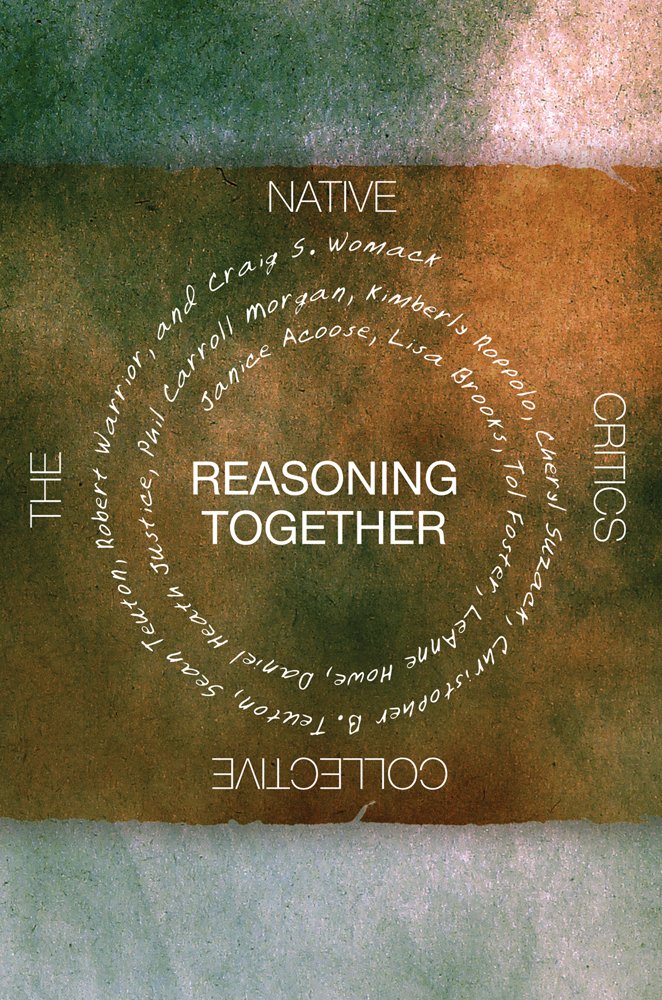
REASONING TOGETHER: THE NATIVE CRITICS COLLECTIVE
This collectively edited and authored volume celebrates a group of Native critics performing community in a lively, rigorous, sometimes contentious dialogue that challenges the aesthetics of individual literary representation. Reasoning Together proposes nothing less than a paradigm shift in American Indian literary criticism, closing the gap between theory and activism by situating Native literature in real-life experiences and tribal histories. It is an accessible collection that will suit a wide range of courses—and will educate and energize anyone engaged in criticism of Native literature.
SOVEREIGN EROTICS: A COLLECTION OF TWO-SPIRIT LITERATURE (no longer recommended)
I was a co-editor of this volume, which our editorial collective imagined to be the most significant anthology specifically focused on contemporary writing by Indigenous queer and two-spirit people. The book has some incredible work by some really talented Indigenous writers with strong connections to their communities. Unfortunately, we relied on self-identification in considering contributors to the volume, and in the years since it’s become painfully obvious that not only was one of the editors (Driskill) not connected to any of their claimed Indigenous communities (primarily Cherokee, but others as well), a few of the contributors also had no demonstrable ties to Indigenous peoples aside from vague and unsubstantiated family stories. To be honest, even in 2011 there were questions about Driskill’s identity claims that I failed to heed due to our then-friendship. (While I won’t deadname them or participate in transphobic rhetoric in challenging their long-unproven claims of belonging, I also won’t acknowledge their appropriated Cherokee name, referring to them either by last name only or as [stolen name] Driskill.)
I believed in the project when it was published in 2011; I still honour the dedication and personal integrity of co-editors Lisa Tatonetti and Deborah Miranda, whose trust and hard work have also been impacted by these revelations; I still believe that the larger vision and the legitimate contributions to the volume merit respect. Yet the ensuing years have repeatedly demonstrated that unsubstantiated and fraudulent identity claims have a corrosive and wide-ranging impact on both the creative and critical work in the field of queer and two-spirit studies, as well as on students and scholars doing work in the field and trusting in the foundational honesty of those publishing in it, and Sovereign Erotics is now fully implicated in those harms. As a result of all these considerations–and as sad as I am to now repudiate it–I believe that Sovereign Erotics is just too badly compromised by the taint of Driskill’s identity fraud and the volume’s conceptual privileging of individualistic self-identification over Indigenous nationhood and sovereignty to recommend it to general readers or scholars. Queer Indigenous Studies is a field currently undergoing significant reimagining and ethical realignment to ensure that legitimate Indigenous belonging is at its centre, not the settler story-making and identity appropriation that dominated so much of the field for so long.
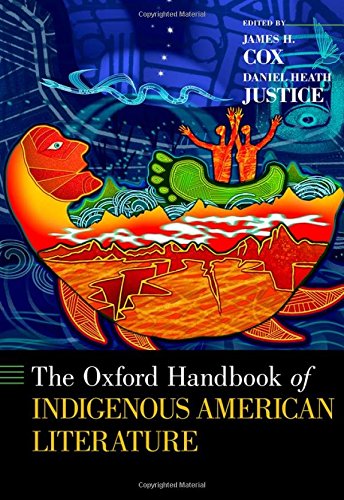
THE OXFORD HANDBOOK OF INDIGENOUS AMERICAN LITERATURE
The Oxford Handbook of Indigenous American Literature is the most comprehensive and expansive critical handbook of Indigenous American literatures published to date. It is the first to fully take into account the last fifteen years of recovery and scholarship, and the first to most significantly address the diverse range of texts, secondary archives, writing traditions, literary histories, geographic and political contexts, and critical discourses in the field….Both rigorously scholarly and intellectually provocative, and committed to literary inclusivity as a guiding structural and theoretical principle, The Oxford Handbook of Indigenous American Literature provides more than historical and critical contexts: in scope, methodology, and content, this collection will help shape the interpretive contours of the field for years to come. Including work by emerging scholars, established critics, and some of today’s most compelling Indigenous writer-scholars, the Handbook is an essential resource for scholars as well as an engaging collection for general readers interested in the depth, range, and diversity of Indigenous American literary expression.
Published: Critical Indigenous Studies
ALLOTMENT STORIES: INDIGENOUS RESPONSES TO SETTLER COLONIAL LAND PRIVATIZATION
CO-EDITED WITH JEAN M. O’BRIEN (WHITE EARTH OJIBWE), UNIVERSITY OF MINNESOTA (UNIVERSITY OF MINNESOTA PRESS, 2022)
The driving force behind settler colonialism has been the expropriation of Indigenous lands through warfare, displacement, incarceration, and—especially in the twentieth and twenty-first centuries—the fracturing of collective Indigenous land tenure into individually owned parcels alienable through the workings of the market. The General (Dawes) Allotment Act of 1887 is the most infamous US example of such land privatization, but similar policies have been implemented in other settler states, continuing to the present day, for example, with reinvigorated focus by governments and extractive industries in the US and Canada. And while privatization and land severalty policies have had profoundly negative impacts on many communities, Indigenous peoples have nevertheless found creative ways of sustaining collective ties, kinship relations, and cultural commitments to their territories through the very legal regimes intended to destroy them.
This collection considers allotment and its analogous settler privatization policies across the globe by centring Indigenous voices, perspectives, and experiences from multidisciplinary, multi-genre perspectives, bringing scholarly analysis, family and community history, first-person testimony, and creative expression into critical conversation. The chapters illuminate the many ways that Indigenous peoples have demonstrated agency in the face of often overwhelming state and corporate pressure, and how they have variously resisted, embraced, and navigated the relentless settler colonial demands for land privatization, while offering insights into ongoing efforts to ensure community continuity and territorial integrity.
Published: Animal Studies
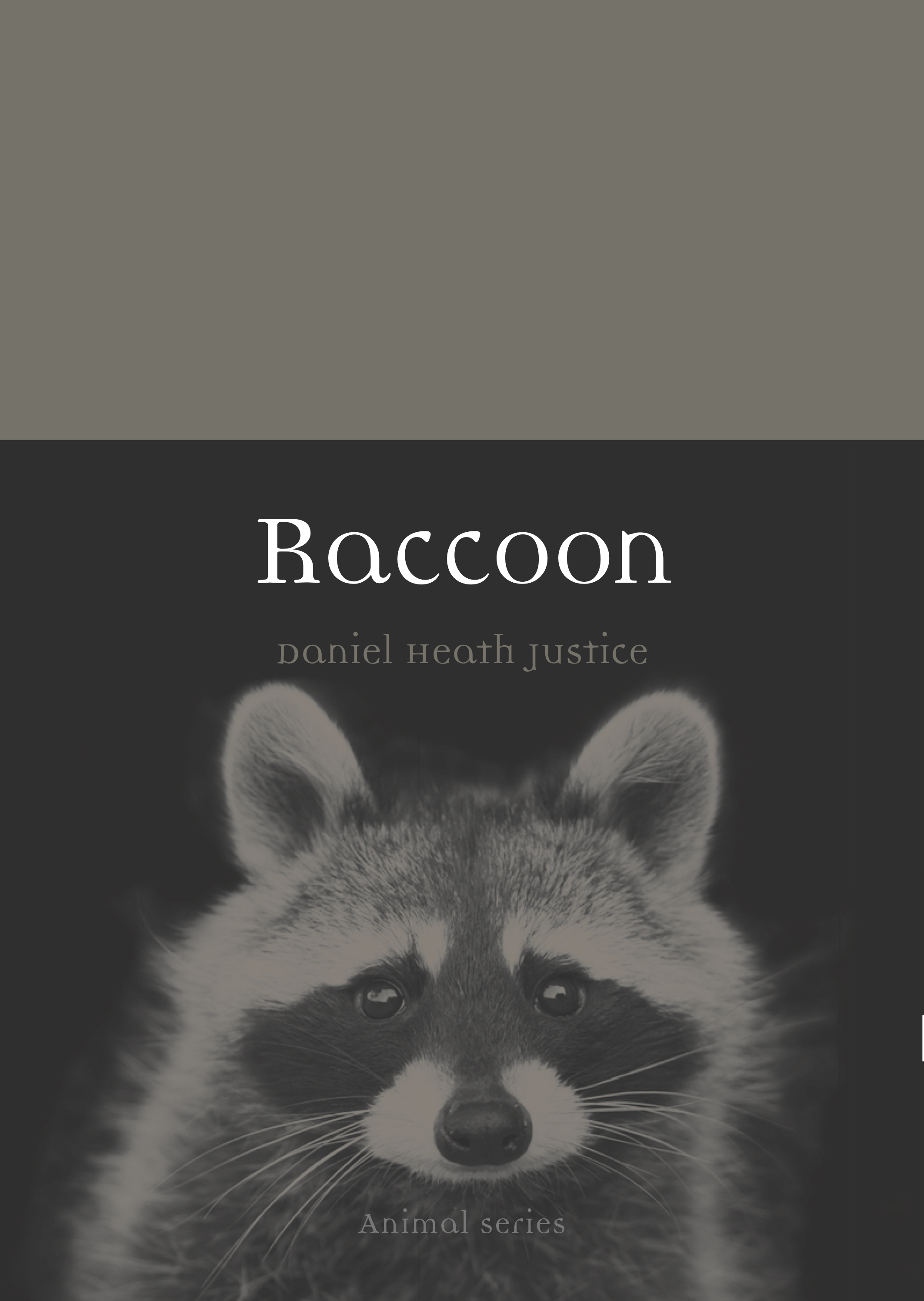
RACCOON
BOOK 100 IN THE ANIMAL SERIES FROM REAKTION BOOKS, EDITOR JONATHAN BURT (Reaktion Books, 2021)
Masked bandits of the night, raiders of farm crops and rubbish bins, raccoons are notorious for their indifference to human property and propriety, yet they are also admired for their intelligence, dexterity and determination. Raccoons have also thoroughly adapted to human-dominated environments; they are thriving in numbers greater than at any point of their evolutionary history…including in new habitats.
Raccoon surveys the natural and cultural history of this opportunistic omnivore, tracing its biological evolution, social significance, and image in a range of media and political contexts. From intergalactic misanthropes and despoilers of ancient temples to coveted hunting quarry, unpredictable pets, and symbols of wilderness and racial stereotype alike, Raccoon offers a lively consideration of this misunderstood outlaw species.
Available outside North America from Reaktion Books, with North American distribution by the University of Chicago Press.
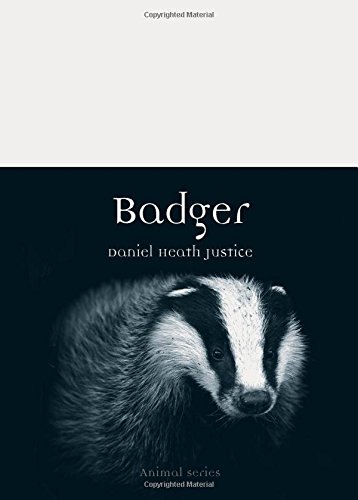
BADGER
Viewed as fierce, menacing or mysterious, badgers have been both admired and reviled throughout human history. Their global reputation for ferocious self-defence has led to brutalization by hunters and sport-seekers; their association with the mythic underworld has made them symbols of earth-based wisdom and steadfast tradition; their burrowing and predation habits have resulted in widespread persecution as pests or public nuisances. Whether as living animals, abstract symbols or commercial resources, badgers have fascinated humans for thousands of years – though often to the animals’ detriment.
From the iconic European badger to the African honey badger, the hog badger of Southeast Asia and the North American badger, this book is the first truly global cultural history of the animal in over 30 years. Profusely illustrated with images spanning centuries, cultures, continents and species, Badger considers badgers’ lives and lore, from their evolution and widespread distribution to their current and often imperilled status throughout the world. It travels from natural history and life in the wild to the myths, legends and spiritual beliefs badgers continue to inspire, as well as their representation and exploitation in industry, religion and the arts. Appealing to anyone interested in a deeper understanding of these much misunderstood and often maligned creatures, Badger traces the complex and often contradictory ways in which this fascinating animal endures.
Species covered: primarily the Eurasian badger (Meles meles), North American badger (Taxidea taxus), and ratel/honey badger (Mellivora capensis), with occasional forays into the world of hog badgers and marginal attention to ferret badgers and stink badgers.
Available outside North America from Reaktion Books, with North American distribution by the University of Chicago Press.
Here’s the official book trailer, featuring “seven things you didn’t know you need to know about badgers”!
Forthcoming
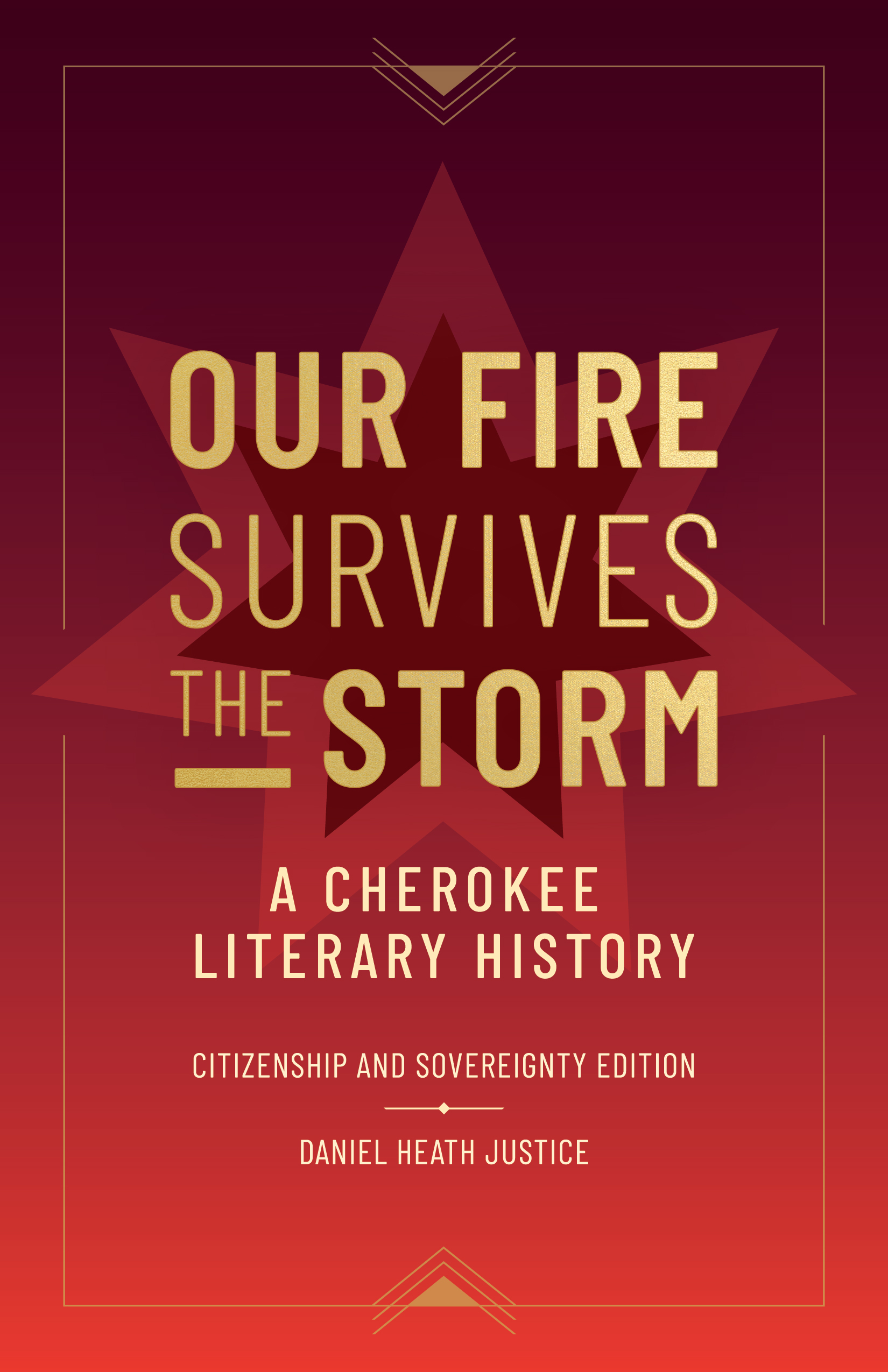
OUR FIRE SURVIVES THE STORM: A CHEROKEE LITERARY HISTORY, CITIZENSHIP AND SOVEREIGNTY EDITION
[Publisher’s description] The twentieth-anniversary edition of the path-clearing study of Cherokee writing in English, with an emphatic refocus on voices from the three Cherokee tribal nations
This Citizenship and Sovereignty Edition of Our Fire Survives the Storm is a thoroughly updated, nationhood-focused, twentieth-anniversary revision of Daniel Heath Justice’s influential study of Cherokee writing in English. Through politically astute and historically grounded readings of diverse texts by citizens of the Cherokee Nation, United Keetoowah Band of Cherokee Indians, and Eastern Band of Cherokee Indians, Justice connects Cherokee literature to Indigenous sovereignty, nationhood, and collective futurity.
Guided by a reparative vision that directly contends with the outdated literary legacies of the book’s first edition, this revision confronts the ongoing harms of unsubstantiated and false Cherokee heritage claims on literary studies, replacing readings of primary texts by unverified claimants with those of Cherokee citizen writers. As Justice addresses issues of accountability, he engages with the past two decades of Indigenous scholarship, fully updating terminology, concepts, and scholarly resources. He expands and deepens the intellectual and historical context for Cherokee literary production introduced in the first edition, and he discusses Cherokee writing and community in the mid-twentieth century, the Cherokee Freedmen’s long struggle for justice, and the future of Cherokee nationhood.
Highlighting the work of authors who illustrate the transformative collective discourses of what it means to be Cherokee, Justice examines the richness of Cherokee literary expression through motifs of roots, removal, and nationhood in traditional stories, speeches, legal and governance documents, memoirs, short stories, novels, and plays. An invitation to reflective criticism, this new edition of Our Fire Survives the Storm is grounded in the belief that Indigenous nationhood is a necessary ethical response to the violence of the settler imaginary.
Available for pre-order here from the University of Minnesota Press.
Articles
STORIFY ESSAY: PERILS OF SETTLER-COLONIAL PATRIARCHY–THE CASE OF THE CHEROKEE PRINCESS
Originally posted as a tweet thread then moved to Storify in January 2017.
Perils of Settler-Colonial Patriarchy: The Case of the Cherokee Princess
STORIFY ESSAY: PRO-TIPS FOR WRITERS INTERESTED IN “NATIVE” THEMES
Originally posted as a tweet thread then moved to Storify in March 2016.
Pro-tips for SF and fantasy writers interested in Native themes….