CHEROKEE FIRES
The traditional homelands of the Cherokee Nation are in what is currently considered the southeastern United States, particularly the mountainous regions of Tennessee, Georgia, Kentucky, the Carolinas, Alabama, and the Virginias. Indeed, “Cherokee” likely comes from a Choctaw word, chalakki, probably meaning “the people who live in caves” as a less-than-flattering reference from a people with whom we’d long had challenging relations, although Cherokee scholars Jack and Anna Gritts Kilpatrick hypothesize that it’s derived from the Cherokee word tsàdlagí, “he [or she] turned aside” (gesturing to our historical migration story). Tsalagi is the Cherokee form of that Choctaw/possibly Cherokee word, whereas aniyvwiya (the Real Human Beings) and ani-giduwagi (People of Kituwah) are self-identifying names that come from the Cherokee language. (In her 1951 A Guide to the Indian Tribes of Oklahoma, Choctaw scholar Muriel H. Wright offers “Ancient Tobacco People” as an intriguing alternative/concurrent meaning for Tsalagi, gesturing to the significance of tobacco in the Cherokee language and in ceremonial practice.) Cherokee oral traditions include origin accounts that place the birthplace of the People in the southern Appalachians, although there are some stories that point to a northern origin–where, in these accounts, we were driven southward by our Haudenosaunee kin–or for a Mesoamerican or South American origin, in which the People originated on a now-lost island or penninsula.
Whatever the birthplace of the Nation, today’s Cherokees generally consider our southeastern homelands to be the crucible of Cherokee culture, from which we have spread across the continent and the globe. Today there are three federally recognized Cherokee political bodies in the United States: Cherokee Nation, its capital in Tahlequah, Oklahoma, which is the largest Cherokee community and the largest tribal nation in the U.S. with over 468,000 citizens (as of 2024); the Eastern Band of Cherokees of the Qualla Boundary in North Carolina; and the United Keetoowah Band of Cherokees in Oklahoma and Arkansas.
While there are certainly people with legitimate heritage who aren’t tribal citizens (though nowhere near the number claimed), there are also the “my great-great-grandmother was a Cherokee Princess” folks, a very sizeable population of individuals and hobby groups that claim unsubstantiated and often anonymous Cherokee heritage for reasons that range from the sincere (if misguided) to actively mercenary–well over twice the number of tribal citizens as of US census data released in 2020. The more problematic members of this subculture tend to insist on the rights of affiliation while ignoring Indigenous nationhood or accountable kinship to a living community, drawing on vague and essentialist claims to “blood,” DNA, unsubstantiated genealogical wish fulfillment, and various pseudo-scientific forms of U.S. ethnic identification. I tend toward an ethos of judicious inclusivity in most things, but inclusivity must also be balanced with good sense, reliable evidence, ethical relations, and careful and accurate research. And the research does matter, as Cherokees have a very long and very extensive documentary history and exceedingly detailed genealogical archive–largely generated from within, in English and Cherokee alike–that merits careful attention and respect.
I’m an enrolled, at-large Cherokee Nation citizen born and raised in Colorado and now living on coastal shíshálh territory in Canada. Cherokee Nation-ᏣᎳᎩᎯ ᎠᏰᎵ is a federally recognized Indigenous Nation with a global population of 468,000 citizens and jurisdiction over a 7000 square mile reservation in northeast Oklahoma in the US. Through our 1999 Constitution (Article IV, Section 1), Cherokee Nation determines formal affiliation as citizenship through confirmed lineal descent from one or more original enrollees on our base 1907 Final Cherokee Dawes Roll. I was raised, along with my dad and siblings, outside the geographic boundaries of the Nation and thus far from our family’s allotment lands in what is currently called Oklahoma. This is a pretty common story for Five Tribes citizens and descendants, especially for those whose families, like mine, were scattered after the allotment process came to Indian Territory in the late nineteenth and early twentieth centuries, a process that resulted in my dad’s maternal kin moving to eastern Colorado from northeast Oklahoma around 1920.
My direct paternal ancestors as well as extended kin are listed in all key records used by Cherokee Nation authorities, researchers, and genealogists to substantiate legitimate, persistent, and ongoing Cherokee relations. Through my late citizen father, Jimmie J Justice, I am a direct descendant of Cherokee Spears and Foreman survivors of the Trail of Tears (Old Fields detachment) as well as Riley Cherokee Old Settlers who emigrated to Indian Territory before Removal, with extended Traitor Party relations and kinship and marriage ties to Crittenden, Parris, Rusk, and other citizen families. My mom, Deanna Kathline (Fay) Justice, was of English, Jewish, and mixed European settler heritage (likely German but possibly Dutch); I’m the third generation of her family to be raised in Victor, Colorado, on stolen Southern Ute homelands.
My paternal grandmother, Pearl Clara Spears (later Justice, then Bowers), was a by-birth dual citizen of Cherokee Nation and the US; her father, Amos Spears, was a Cherokee Nation citizen, an original Dawes allottee, and a Cherokee Male Seminary alumnus; her great-grandfather, James Spears, was an elected member of the Cherokee National Council before and after Removal and a signatory to the Aquohee Resolution of 1838 and the reunification Constitution of 1839. Although our citizenship line in the Nation is unbroken, I was not raised culturally Cherokee: Pearl’s 1945 death from tuberculosis largely ruptured my dad’s relationship with her family, although his older sister Alverta remained close to our Spears kin. Dad and Alverta were estranged when I was young but reconciled when I was a teenager, and the restoration of our Cherokee relations, cultural commitments, and political obligations has grounded my subsequent life’s work, both at a distance and on regular trips to Oklahoma and the Cherokee Nation proper.
And this is a key point: many Cherokee families remained; not everyone left. My immediate family and many others owe a huge debt of gratitude to those Cherokees who’ve kept the fires of nationhood burning in our homelands. Too often in discussions of these kinds it’s implied that all was disrupted or that everyone was uprooted, but many Cherokee families have stayed put and have held on to the language, stories, traditions, and relations, and it’s largely because of them that these things are still vibrant. At the very least the work of Cherokees raised outside the Nation is to not make the lives and work of our grounded kin harder; if we can do more to support and strengthen both, all the better. Knowing our relations and both the presences and the ruptures in our histories is part of that important and humbling work.
My citizenship status can be verified by contacting the Cherokee Nation Tribal Registration department directly by phone or email: 918-453-5058, registration@cherokee.org. As a member of Digadatseli’i ᏗᎦᏓᏤᎵᎢ Cherokee Scholars (an association of citizen-scholars from the three federally recognized Cherokee Tribal Nations) and signatory to the 2020 Cherokee Scholars’ Statement on Sovereignty and Identity, I don’t consider this information confidential.
IMPORTANT NOTE: For the most accurate information about Cherokee culture, politics, and history, and for information relating to historical and contemporary Cherokee concerns as well as citizenship status, criteria, and kinship ties, go to the official tribal websites, or contact the tribes directly. Keep in mind, too, that although Cherokees are perhaps the most widely documented Indigenous people in the US and have been for the better part of two centuries, much of that material comes from outsiders and is problematic, incomplete, unreliable, or downright pernicious, so it’s important to prioritize informed Cherokee voices on Cherokee matters.
PLACES I’VE CALLED HOME
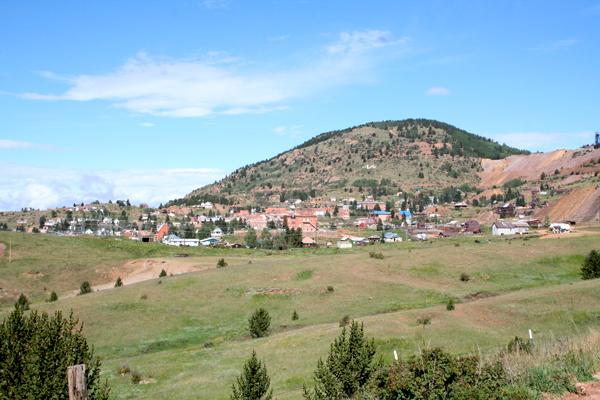
Victor, Colorado, part of the “World’s Greatest Gold Camp” (1978-today)
Victor is nestled on the southern slope of Evening Star Mountain, in the eastern edge of the Rocky Mountains, not far southwest of Pike’s Peak. It sits in the traditional homelands of the Mouache band of Ute Indians, who constitute much of today’s Southern Ute Indian Tribe. At nearly ten thousand feet in elevation, the area is a beautiful mix of pine and aspen forests, sweeping mountain peaks, historical mining structures, contemporary mining operations, limited stakes gambling in nearby Cripple Creek, and plenty of opportunities for hunting, fishing, hiking, and solitude. Its history is both glorious and grim; after displacing the Utes and other Native peoples from the region, thousands of non-Indians descended on the mountains, driven variously by gold, need, and greed, and most either moved on, died, or faded into obscurity. So, for all its beauty, Victor is also a town that’s long struggled to define itself in an ever-changing economy, and for some residents it continues to be a place of lost dreams and thwarted ambitions, while others work hard to make homes and heritage better for those who live there now and those generations to come. Even with its troubles, Victor is inhabited by plenty of strong, determined, and loving people, and I’m proud as hell to have been raised there by parents who continue to be my first and greatest heroes. This will always be my heart home and I’ll always consider myself connected to the place, no matter how far away I go or how long it’s been since I’ve lived there in person.
A photo art book on Victor offers a lovely and haunting picture of Victor, its past, and its present. Produced by London-based photographers Jonathan Anderson and Edwin Low, City of Mines is an impressive book, and one of the few that focuses on Victor and not Cripple Creek, its more famous neighbour to the west.
Greeley, Colorado (1993-1997)
Greeley is a small city in northeast Colorado that is claimed as traditional territories primarily by the Arapaho and Cheyenne peoples, but including others, such as the Sioux and Utes. When I lived there it was best known as home to the celebrated science fiction writer Connie Willis, the University of Northern Colorado, and the nearby Monfort Feedlots, from which would waft a weekly, eye-watering stench. (Fortunately, the miasma wasn’t constant; on the whole, Greeley was and remains a clean, pretty city.) It was a wonderful place to go to school and start to explore life and its possibilities (though frighteningly homophobic at the time, and only an hour or so from Laramie, Wyoming, where Matthew Shepard was tortured and killed just after I left), and I learned a lot in my time there and made deep friendships that continue today. It’s where I first really started to take pride in being Cherokee, and where I first started to consider Indigenous literary studies as a vocation, so I continue to have a lot of fondness for the place and the people. Dad and I recently drove back to check it out, and not much has changed around the old part of campus where I spent much of my time. I was very pleased to notice that The Book Stop and Margie’s Java Joint were still going strong!
Lincoln, Nebraska (1997-2002)
The settler history of Nebraska defines much of its character. Indeed, the first thing that visitors to Lincoln notice is the Nebraska State Capitol, more memorably known as the “Penis of the Plains,” the unmistakably phallic statehouse that towers over other buildings in the city, topped with the statue of “The Sower” spreading his seed across the land. It is, in fact, a gorgeous Art Deco building that emphasizes the settler history of the state, which is the guiding image for much of Nebraska’s self-representation, in spite of the long history and continuing presence of the Omaha, Winnebago, Ponca, Pawnee, Iowa, Oto, Sac and Fox, and Ogalalla and Santee Sioux tribes and other prairie Nations. It was a fascinating and challenging place to come of age as a mixed Native scholar and to come out as a gay man; anti-Indian prejudice and homophobia were (and are) present, but so too were (and are) lots of courageous, generous, and justice-oriented people who made the challenges manageable and made possible a lot of great work and lasting connections. My closest friends from that time continue to be in my life today, and I look back on my education at the University of Nebraska-Lincoln (and my work as editorial assistant in the Centre for Great Plains Studies) with deep fondness and lasting gratitude.
Toronto, Ontario (2002-2012)
I wasn’t sure what to expect by Toronto, but it certainly wasn’t sweltering summers! But my first real introduction to southern Ontario was a hot and sticky August afternoon in 2002, when my then partner, our dogs, and I arrived to the Church-Wellesley area of downtown Toronto and unpacked our things into a tiny, one-bedroom condo. It was cramped, but in good proximity to the University of Toronto, where I started my work as one of the English Department’s Aboriginal literature specialists. Toronto is in the traditional territories of the Mississaugas of the New Credit First Nation, and has been home to various Algonquin and Haudenosaunee (Iroquoian) peoples for centuries. Long known as “the Gathering Place” by its Indigenous inhabitants, it continues that tradition as Canada’s largest and most diverse multicultural city. There’s a vibrant Indigenous arts, film, theatre, and literature scene in the city, which features the imagineNATIVE Film and Media Arts Festival, the Native Earth Performing Arts theatre company, the Indigenous Writers’ Gathering at U of T’s First Nations House, Planet IndigenUs at the Harbourfront Centre, and many other amazing venues and opportunities to learn, share, and express Indigenous creative spirit. Toronto was a great home for me for nearly five years, at which time I moved about two hours north with my soon-to-be husband, but I continued to work in and commute to the city for the rest of my time in Ontario, so I still consider it a home of sorts during that extended period.
Tiny Township, Ontario (2006-2012)
Kent and I moved north, where we bought a house not far from the shores of Georgian Bay in the region now called Huronia by the French, but more accurately known as Wendake, the ancient homeland of the Huron-Wendat peoples. The region was sent into upheaval in the eighteenth century as a result of bloody conflict between the French Jesuits and their Christian Huron-Wendat allies on one side and Wendat and Haudenosaunee traditionalists on the other. Anishinaabe and Mohawk people now call the extended region home, and there’s a sizeable Anishinaabe community, Beausoleil First Nation, on Christian, Beckwith, and Hope Islands, just across the water from our home. The larger region is called Simcoe County, and the township in which we lived is Tiny, one of three townships named for the pet dogs of Lady Simcoe; the others are Tay and Flos, so I think we lucked out! Tiny, Penetanguishene, and Midland are the main communities in the area, and there’s much to do and enjoy in the region.
Huronia/Wendake is a lovely place, with amazing people, glorious natural beauty, and a rich and diverse history. It was the perfect place to start our married life together, and to start building an extended network of friends. It’s also a great place to get down-to-earth haute cuisine at The Explorers Cafe in Midland, one of our favourite places to eat in the region. Although we’ve moved to the West Coast, we’ve kept a lot of love going back to our friends and Georgian Bay.
Vancouver, British Columbia (2012-2016)
For our first four years in BC we lived on the UBC campus, which sits on the traditional, ancestral, and unceded territories of the Musqueam people, who have lived continuously on the peninsula known today as Point Grey for thousands of years. We were honoured to be visitors living on Musqueam land, and I continue to be grateful for the ongoing opportunity to work on their territories and in relation with such a generous community.
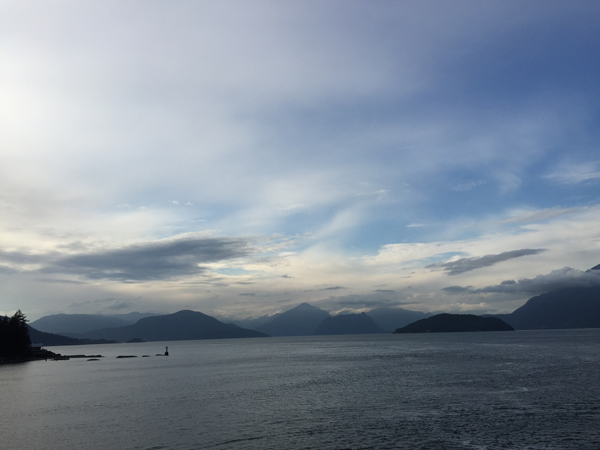
The Sunshine Coast, British Columbia (2016-present)
We now live on the Sunshine Coast, in the traditional territories of the shíshálh (Sechelt) people, and have found it to be a warm and welcoming place with many festivals, gatherings, and activities taking place all year long. We’re still learning a lot about the region, its communities, and its histories, but it’s been a great experience, and the welcome we’ve thus far received has been beyond anything we expected.